

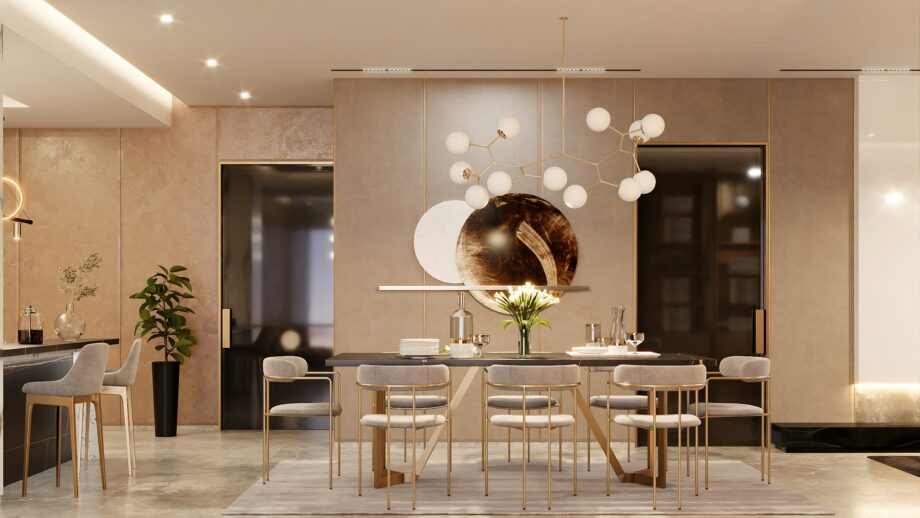
Calm is created, not purchased
A calm home is not necessarily minimal. It is a home where the eye knows where to rest. The feeling comes from balance: enough objects to create personality, enough empty space to create ease, and a palette that allows materials and light to become part of the design.
Begin with a quiet palette
Warm neutrals are a useful starting point because they allow individual pieces to speak without visual competition. Cream, sand, stone, soft brown and muted charcoal can sit together naturally. A restrained palette also makes it easier to introduce one stronger object without making the room feel busy.
Use texture instead of clutter
When colour is restrained, texture becomes essential. Think ceramic beside wood, woven fabric beside stone, or brushed metal against a soft textile. These contrasts create richness without requiring more decoration. The result is an interior that feels layered rather than crowded.
Give important pieces room
One of the most common mistakes in styling is giving every object equal importance. Instead, choose a few pieces that deserve attention and allow space around them. A sculptural vase on an otherwise quiet console can have more impact than a collection of smaller objects filling the same surface.
Light changes everything
Natural light should be considered alongside artificial light. During the day, let daylight move through the room. In the evening, use lower and warmer sources to create intimacy. Lamps are particularly useful because they provide both function and visual character.
Make the home feel lived in
Calm should never mean sterile. Books, flowers, ceramics, photographs and objects collected over time give a room its identity. The goal is not to remove personality but to edit it. Keep what contributes to the feeling you want the room to have.
The Ellen Colé approach
Our preference is for interiors that feel composed but never overworked. A home should offer a sense of quiet when you enter it and still reveal details as you spend time there. That is where considered living begins.