

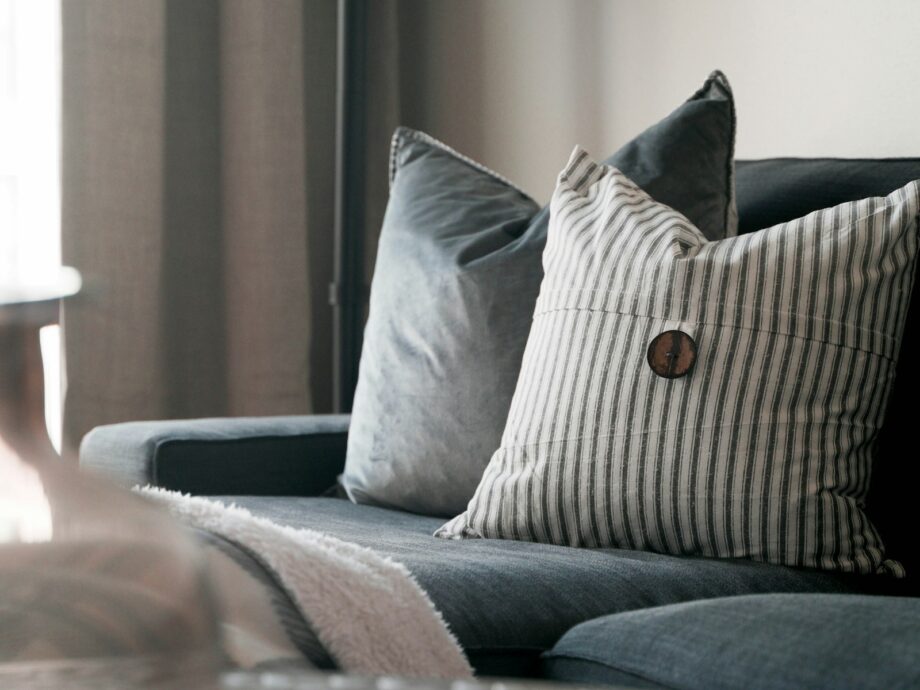
Texture makes neutral interiors sing
A restrained colour palette can be elegant, but without texture it can also feel flat. Natural materials introduce variation through surface, grain, weight and reflection.
Stone brings visual weight
Stone has a quiet permanence. Marble, travertine and other natural surfaces introduce subtle variation and a sense of substance. Even a small stone object can anchor a composition.
Wood introduces warmth
Wood softens contemporary spaces because the grain adds movement without demanding attention. Pairing wood with ceramics or stone creates a natural balance between warm and cool materials.
Ceramic adds tactility
Ceramic is particularly versatile because it can be smooth, rough, matte or glossy. A sculptural ceramic vase can become a focal point while a simpler vessel can provide a quieter layer.
Woven surfaces soften a room
Textiles and woven materials absorb light and sound, making them useful when a space feels visually or acoustically hard. Even small woven details can create a more comfortable atmosphere.
Contrast is the key
Natural materials work best when they are allowed to contrast. Smooth beside rough, warm beside cool, matte beside reflective. These relationships create richness without relying on strong colour.
A home with depth
The goal is not to fill a room with natural materials. It is to introduce enough variation that the space feels tactile and alive. The quieter the palette, the more important these subtle differences become.