

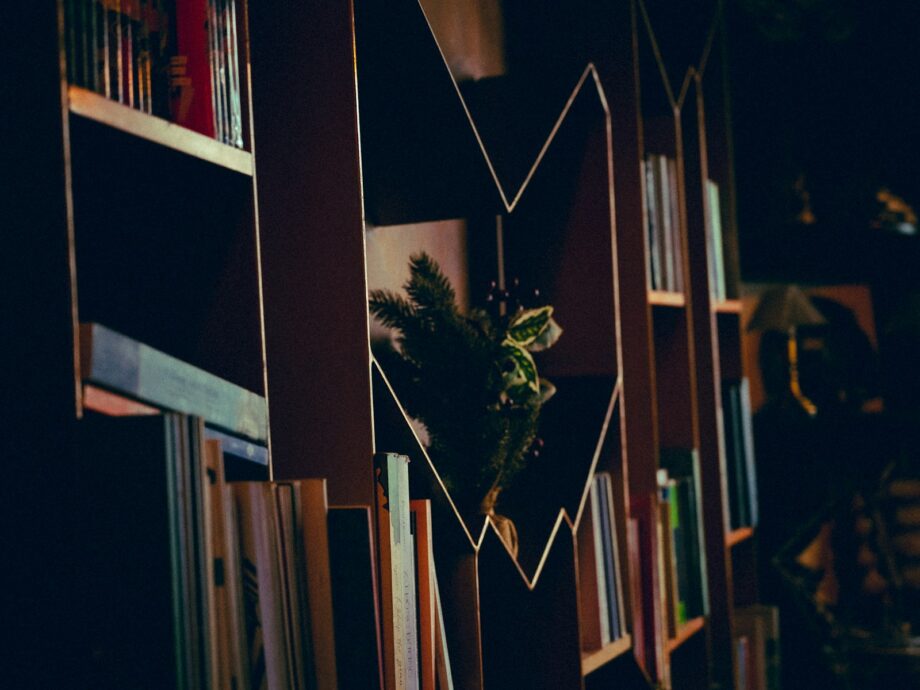
Start with the architecture
Before adding objects, look at the shelf itself. Consider its width, height, colour and relationship to the surrounding wall. These details determine how much visual weight the styling can comfortably carry.
Create anchors
Begin with a few larger pieces: a sculptural vase, a stack of books, a framed work or a substantial decorative object. These anchors establish the rhythm. Smaller pieces can then be introduced around them.
Vary the height
A shelf becomes more interesting when objects do not all sit at the same level. Combine tall and low pieces, horizontal and vertical books, and different silhouettes. Variation creates movement without requiring more objects.
Leave negative space
Empty space is not unfinished space. It gives the objects around it importance. If every section of a shelf is occupied, individual pieces lose their presence and the overall composition becomes visually heavy.
Repeat materials thoughtfully
Repetition creates cohesion. You might repeat ceramic across two shelves, introduce a similar metal finish in another area, or echo the colour of a book in a nearby object. These small relationships make a collection feel intentional.
Edit from a distance
Step back and look at the shelves from across the room. The composition should read as a whole before individual objects are noticed. Remove anything that feels unnecessary rather than adding something to fill a gap.
Let the collection evolve
The most beautiful shelves often change. Rotate objects seasonally, bring home something meaningful from a trip, or replace a piece when your taste changes. A shelf should reflect a life, not a single styling session.